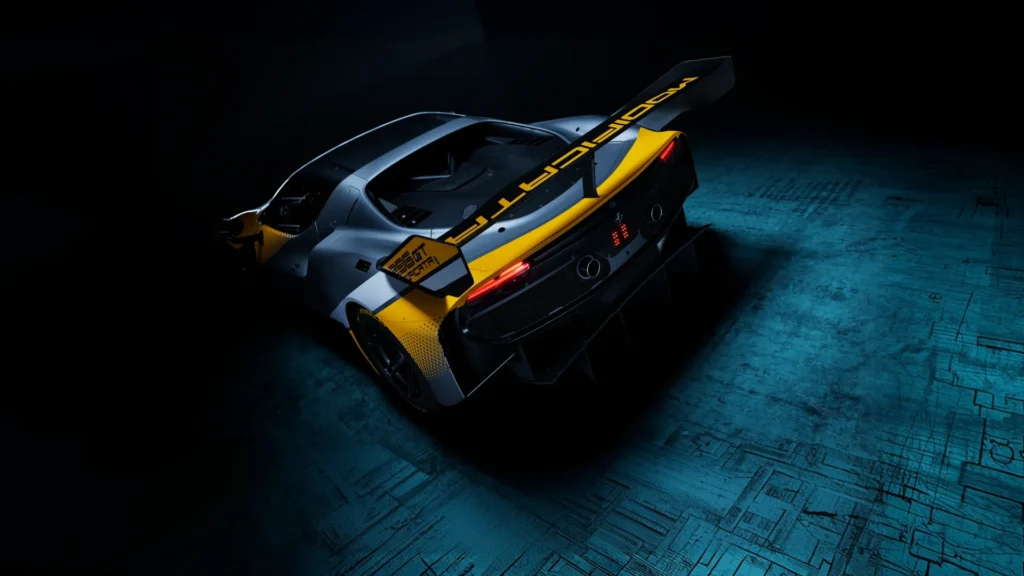
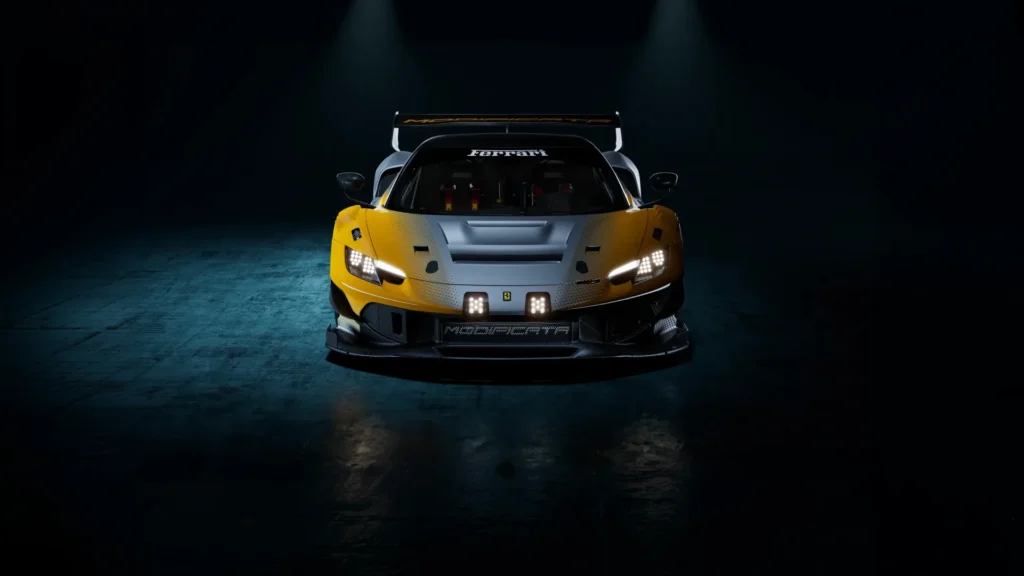
The 296 GT Modificata retains the architecture and unmistakable racing pedigree of the 296 GT3 Evo, freed from the regulatory constraints that govern its competition counterpart. The result is a special version of an existing model engineered to realize the platform’s full potential, pushing technology, performance, and driving pleasure to new heights.
Created exclusively for the Club Competizioni GT program and produced in exceptionally limited numbers, the 296 GT Modificata offers an uncompromising expression of Ferrari performance, conceived for the pure exhilaration of non-competitive track driving.
2 Engine
730 HP V6
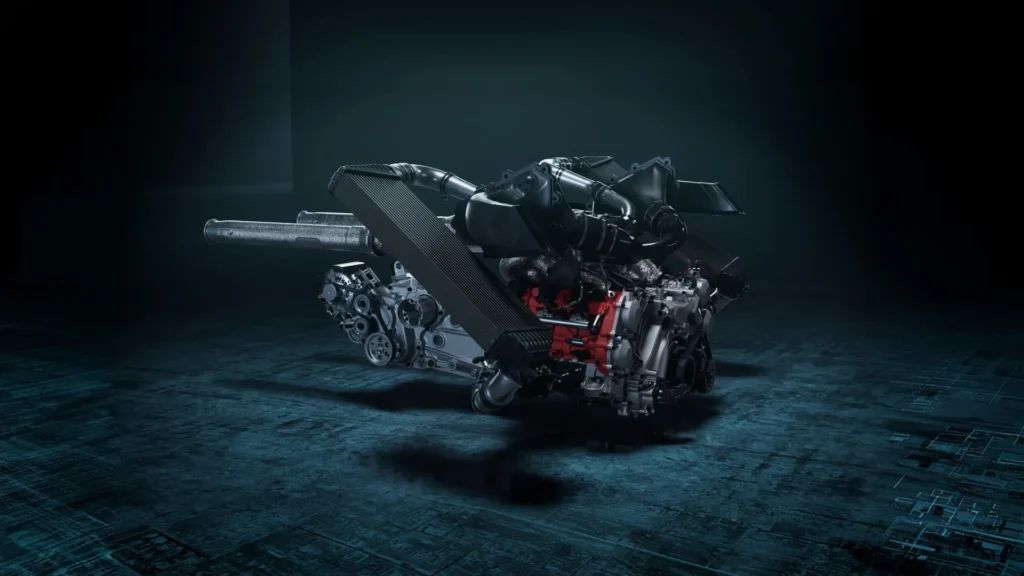
The 296 GT Modificata is powered by the latest iteration of the rear-mid mounted 120° twin-turbo V6 architecture that has successfully powered both Ferrari production and race models. Developed unfettered by the constraints imposed by motorsports or technical regulations, the 2,992 cc engine produces 730 cv—130 cv more than the rules-restricted 296 GT3 Evo.
Extensive development of the engine’s key components and systems, including its rotating assembly, camshafts, intake system, intercoolers and turbochargers, enables unprecedented performance for a Ferrari GT model. With a benchmark specific output of 244 cv/l, power is delivered seamlessly and progressively through a six-speed sequential gearbox with dedicated ratios, contributing to a top speed of over 300 km/h.
Maximum power output
730 cv
Specific output
244 cv/l
3 Aerodynamics
Engineered for extreme performance
To complement the increase in power, the 296 GT Modificata’s aerodynamics and cooling systems were re-engineered to meet the car’s greater performance demands. A new front hood maximizes heat dissipation, while revised vents and a dedicated airflow-management vane optimize thermal management during intensive track use.
An all-new slotted front splitter improves underfloor efficiency, generating additional downforce and enhancing high-speed stability. At the rear, a newly developed wing improves aerodynamic efficiency while preserving the car’s optimal balance and predictable dynamic behavior.
4 Interior
Born for two
The cabin was developed around the driver while accommodating a passenger without compromising safety or functionality. Changes to the roll cage made it possible to install a second seat, complemented by a dedicated footrest and integrated intercom system.
The two-seat configuration allows a coach to accompany the driver and provide real-time feedback throughout each session. This makes the process of refining technique and improving performance more effective, while creating a shared and more rewarding track experience.